
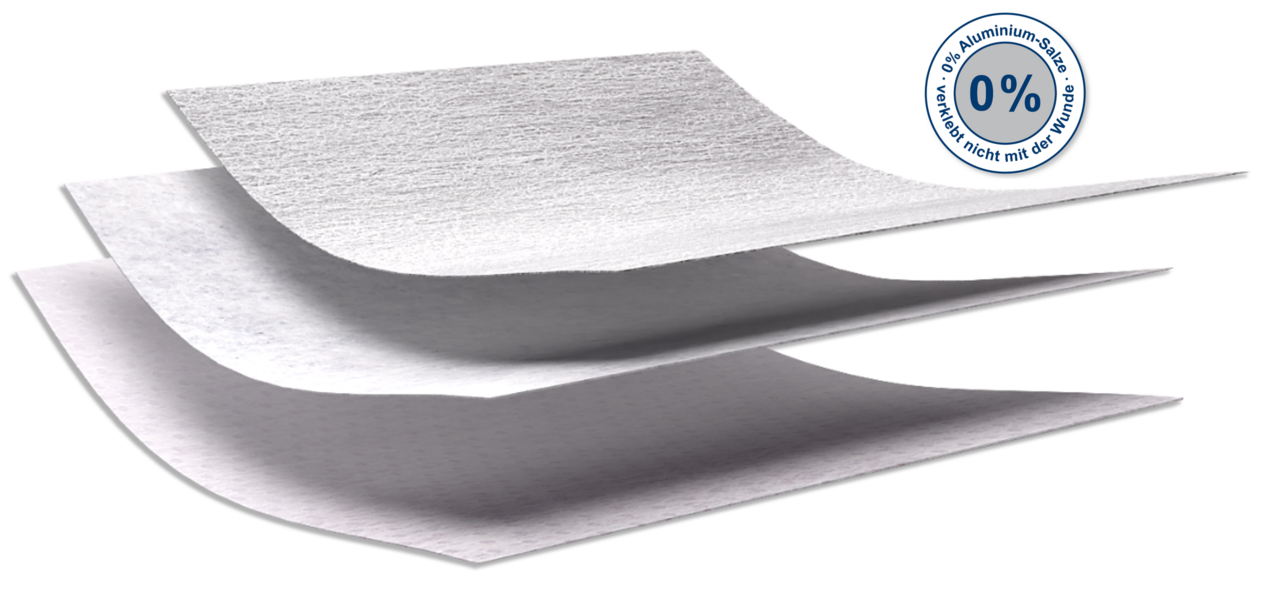
- Optimal moisture
aluderm+ keeps moisture evenly distributed across the entire surface. This keeps the area directly above the wound pleasantly moist, but not too wet – which supports natural wound healing.
-
No seepage, no soaking.
The applied fluid is securely bound in the absorbent core. This keeps the underlay dry and clean. -
A moist environment supports wound healing.
A slightly moist wound environment is now considered optimal: it promotes cell regeneration, prevents scabbing and thus reduces scarring. -
Gentle when changing dressings.
The aluminium-coated surface ensures that aluderm+ does not stick to the wound. The dressing can be changed easily and painlessly without damaging the sensitive tissue. This promotes calm, rapid wound healing. -
Ideal for acute wounds
Thanks to its non-adhesive properties, aluderm+ is very well suited for burns, abrasions, cuts and lacerations.
![[Translate to English:] Verletzte Hand wird mit Verband von aluderm versorgt](/fileadmin/_processed_/2/5/csm_Wundversorgung_Neu_3d05cf2a9a.jpeg)
How to treat wounds correctly:
- Stop bleeding:
For wounds that are bleeding heavily, apply light pressure to the wound with a clean cloth or bandage to stop the bleeding. If necessary, raise the affected area of the body to reduce blood flow. - Clean and disinfect the wound:
Carefully clean the wound with a wound spray to remove dirt and foreign bodies. - Protect the wound:
Cover the wound with a plaster or bandage to protect it from dirt, germs and other external influences. - Continue wound care:
Change the plaster or bandage regularly to keep the wound clean, promote healing and prevent infection.
The right material for every wound:
- Minor injuries:
Use classic plasters for quick protection. - Sensitive skin:
Sensitive plasters are particularly skin-friendly. - For children:
Children's plasters with colourful designs provide distraction and enjoyment. - Special wounds:
Fingertip plasters and adhesive plasters are ideal for hard-to-reach areas.
Innovative wound care for your health
With the right products and careful care, wounds can heal quickly and easily. Trust in our high-quality aluderm+ plasters and dressing materials, which offer you protection and comfort. Because a well-cared-for wound is the first step to a quick recovery!
Acute wounds
First aid and proper treatment
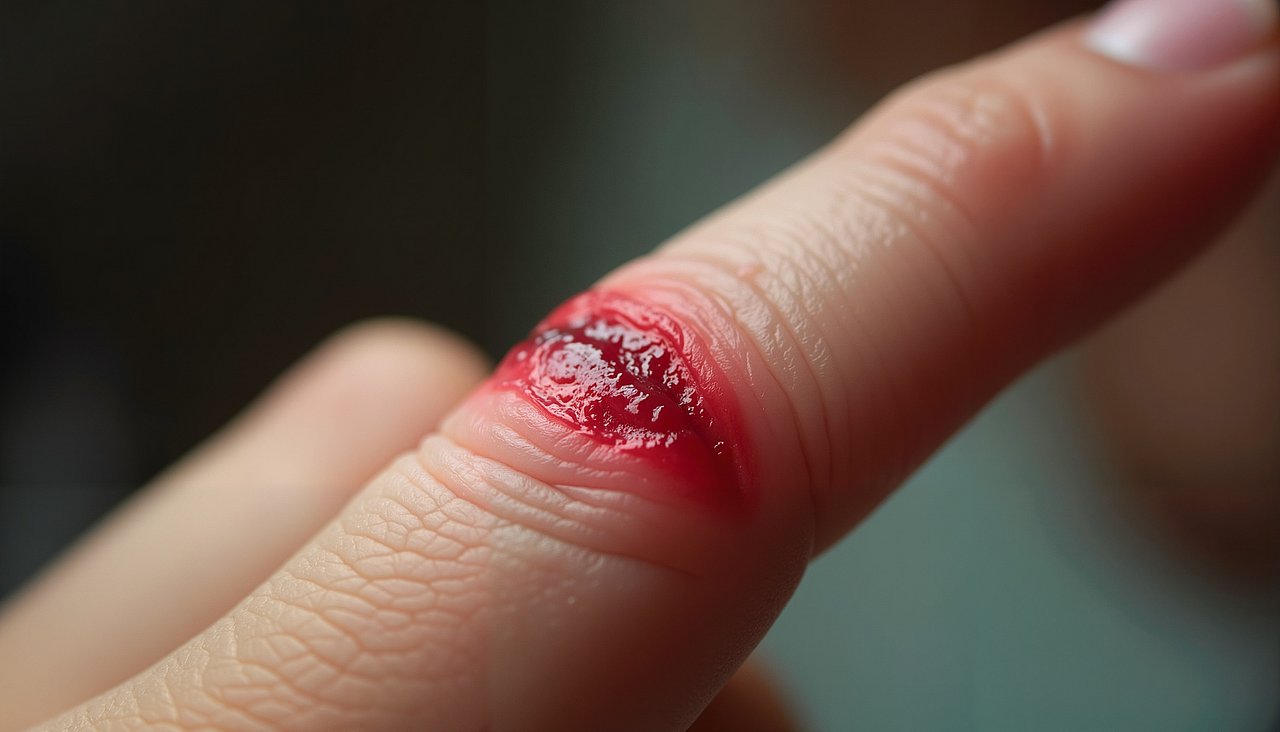
Acute wounds are injuries that occur suddenly and are caused by external influences such as cuts, punctures, abrasions, burns or bruises. They are often associated with bleeding and require rapid and targeted treatment to avoid complications such as infections or delayed healing.
What are acute wounds?
Acute wounds are injuries to the skin and underlying tissue caused by sudden force. They can take various forms:
- Cuts:
Caused by sharp, pointed objects such as knives or glass. - Abrasions:
Caused by friction of the skin on rough, blunt surfaces. - Puncture wounds:
Caused by pointed objects such as needles or nails. - Contusions:
Caused by blunt force that damages the tissue without visible skin injury. - Burns:
Caused by contact with hot water, fire or chemicals.
First aid for acute wounds
- Stop bleeding:
For wounds that are bleeding heavily, apply light pressure to the wound with a clean cloth or bandage to stop the bleeding. If necessary, raise the affected area of the body to reduce blood flow. - Clean and disinfect the wound:
Carefully clean the wound with a wound spray to remove dirt and foreign bodies. - Protect the wound:
Cover the wound with a plaster or bandage to protect it from dirt, germs and other external influences. - Continue wound care:
Change the plaster or bandage regularly to keep the wound clean, promote healing and prevent infection.
When to see a doctor?
Acute wounds should always be examined by a professional if:
- the bleeding does not stop after prolonged pressure
- the wound is deep or extensive
- is located near joints, nerves or internal organs
- foreign objects such as glass or metal are stuck in the wound
- there are signs of infection (e.g. redness, pus formation, severe pain)
- the injury was caused by a toxin or chemicals
Innovative wound care for your health
With the right products and careful care, wounds can heal quickly and easily. Trust in our high-quality aluderm+ plasters and dressing materials, which offer you protection and comfort. Because a well-cared-for wound is the first step to a quick recovery!
What are burns?
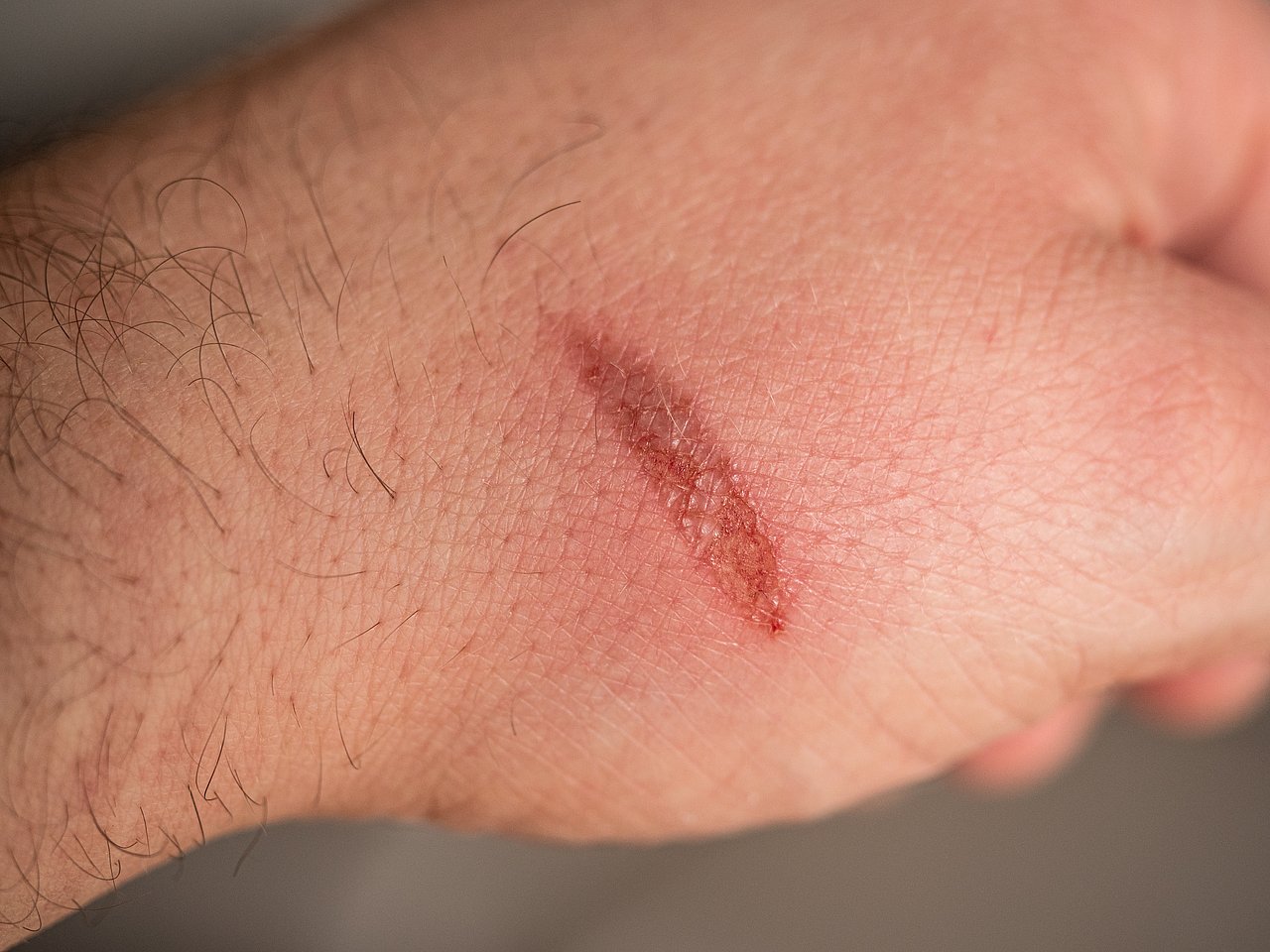
Burns are classified into three degrees according to their severity:
- First degree:
These burns only affect the top layer of skin. The skin becomes red, painful and may swell slightly, but there is no blistering. - Second degree:
These burns also affect the underlying layer of skin. The skin blisters and the pain is more intense. - Third degree:
Here, the entire layer of skin is affected and deeper tissue may also be damaged. The skin may appear white, burnt or charred, and there is usually no pain due to nerve damage.
First aid for burns
- Cool immediately:
Cool the affected area immediately with cool (not ice-cold) water for at least 10–20 minutes. This helps to dissipate the heat and relieves pain. - Do not burst blisters:
If blisters form, leave them intact to reduce the risk of infection. - Cover cleanly:
Cover the burn with a plaster or bandage to protect the wound from infection. - Do not rub:
Avoid rubbing or scratching the burned skin, as this can interfere with the healing process.
When should you see a doctor?
Seek immediate medical attention or go to the emergency room if:
- the burn
- covers a large area or measures more than 3–5 cm in diameter
- is third degree
- is located on sensitive areas such as the face, hands, feet or genital area
- it was caused by chemicals or electricity
After treatment
After initial treatment, you should check the burn regularly and change the dressing to ensure that the wound remains clean and does not become infected.
Innovative wound care for your health
With the right products and careful care, wounds can heal quickly and easily. Trust in our high-quality aluderm+ plasters and dressing materials, which offer you protection and comfort. Because a well-cared-for wound is the first step to a quick recovery!
What are cuts?
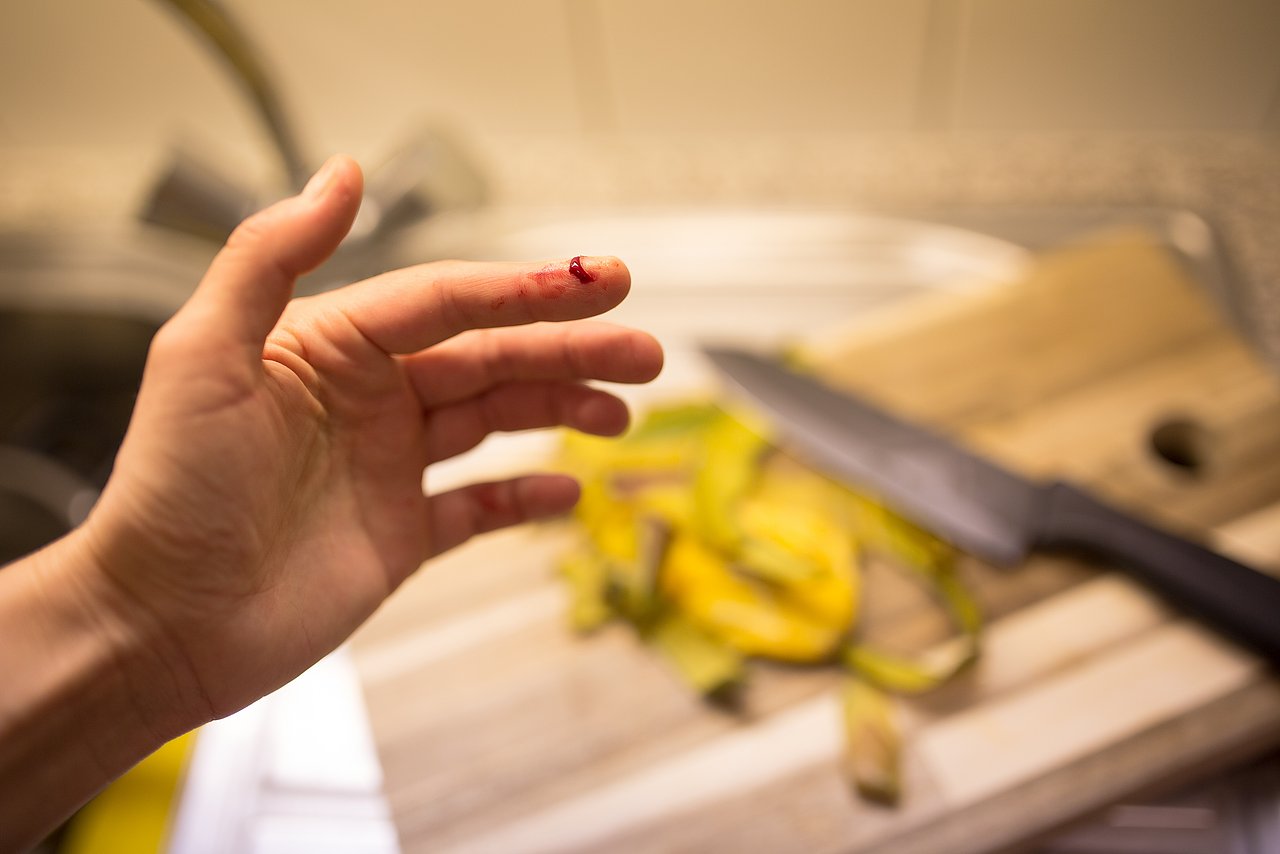
Cuts are caused by sharp objects such as knives, glass or metal. They are often characterised by smooth edges and usually bleed more than other injuries. However, bleeding is a natural protective mechanism of the body to flush dirt and germs out of the wound.
How do I treat a cut properly?
- Stop the bleeding:
For wounds that are bleeding heavily, apply light pressure to the wound with a clean cloth or bandage to stop the bleeding. If necessary, raise the affected area to reduce blood flow. - Clean and disinfect the wound:
Carefully clean the wound with a wound spray to remove dirt and foreign bodies. - Protect the wound:
Cover the wound with a plaster or bandage to protect it from dirt, germs and other external influences. - Continue wound care:
Change the plaster or bandage regularly to keep the wound clean, promote healing and prevent infection.
When to see a doctor?
Zee a doctor if...
- the wound
- is deep or longer than 2 cm
- is located near joints or tendons
- bleeding does not stop after 10 minutes of pressure
- dirt or foreign objects cannot be removed
- the last tetanus vaccination was more than 5 years ago
Tips for quick healing
- Change plasters and dressings regularly to keep the wound clean and dry.
- Avoid vigorous movements that could strain the edges of the wound.
- If necessary, use special wound care products such as wound gel to promote healing.
Innovative wound care for your health
With the right products and careful care, wounds can heal quickly and easily. Trust in our high-quality aluderm+ plasters and dressing materials, which offer you protection and comfort. Because a well-cared-for wound is the first step to a quick recovery!
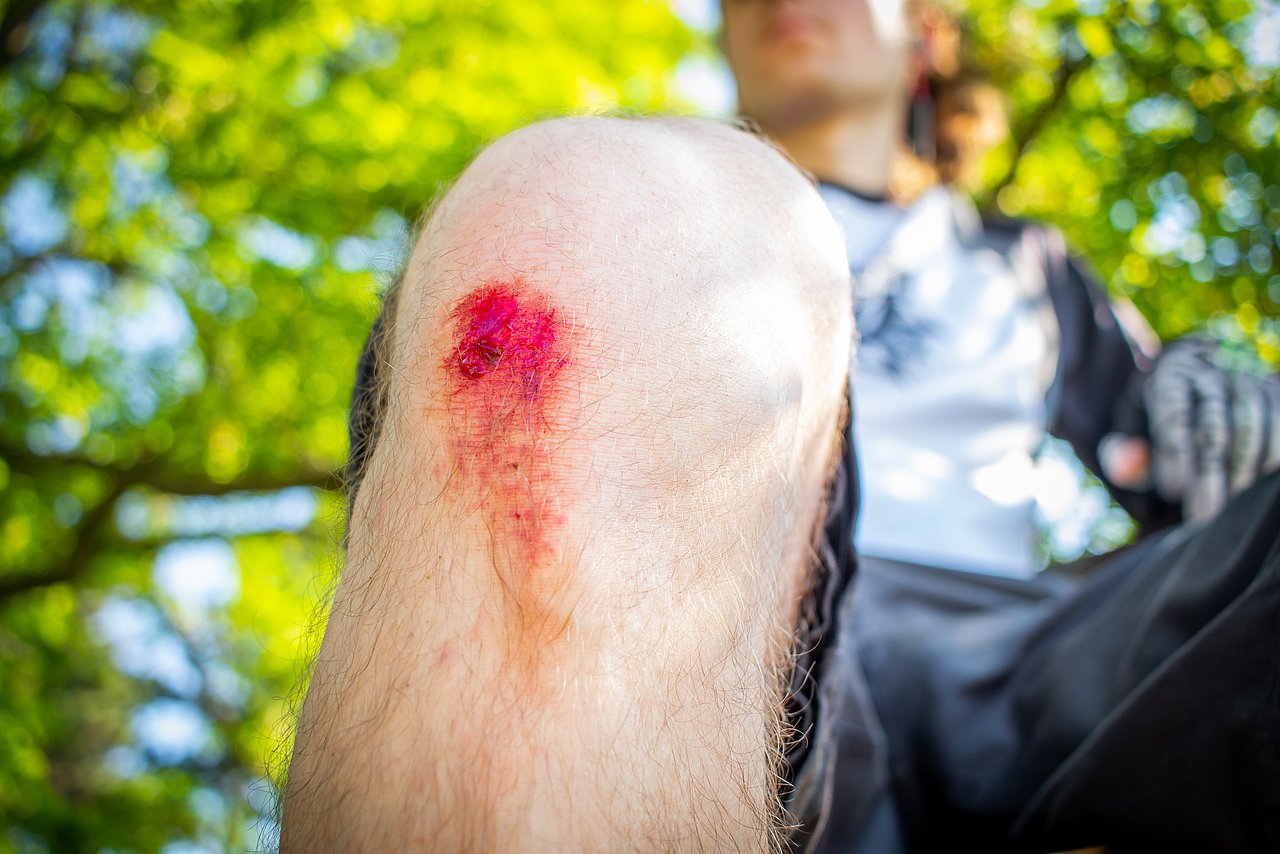
What are abrasions?
Abrasions occur when the top layers of skin are rubbed off. They are often shallow wounds that do not penetrate deep into the tissue but can affect large areas of skin. They are often associated with bleeding, redness and swelling, with the pain usually caused by irritation of the nerve endings in the upper skin area.
First aid for grazes
- Stop the bleeding:
For wounds that are bleeding heavily, apply light pressure to the wound with a clean cloth or bandage to stop the bleeding. If necessary, raise the affected area to reduce blood flow. - Clean and disinfect the wound:
Carefully clean the wound with a wound spray to remove dirt and foreign bodies. - Protect the wound:
Cover the wound with a plaster or bandage to protect it from dirt, germs and other external influences. - Continue wound care:
Change the plaster or bandage regularly to keep the wound clean, promote healing and prevent infection.
When to see a doctor?
In most cases, grazes are harmless and can be treated at home. However, consult a doctor if:
- the wound is deep or extensive
- is located near joints or tendons
- becomes inflamed or purulent
- the bleeding does not stop after prolonged pressure
- you have suffered the wound from a dirty object (e.g. broken glass or rusty nails) and there is a risk of tetanus
Follow-up treatment and healing
Grazes usually heal quickly if they are treated properly. To promote healing, avoid touching the wound unnecessarily and protect it from direct sunlight to minimise scarring. For larger grazes or after a longer healing period, it may be advisable to treat the wound with special wound gels or ointments.
Innovative wound care for your health
With the right products and careful care, wounds can heal quickly and easily. Trust in our high-quality aluderm+ plasters and dressing materials, which offer you protection and comfort. Because a well-cared-for wound is the first step to a quick recovery!
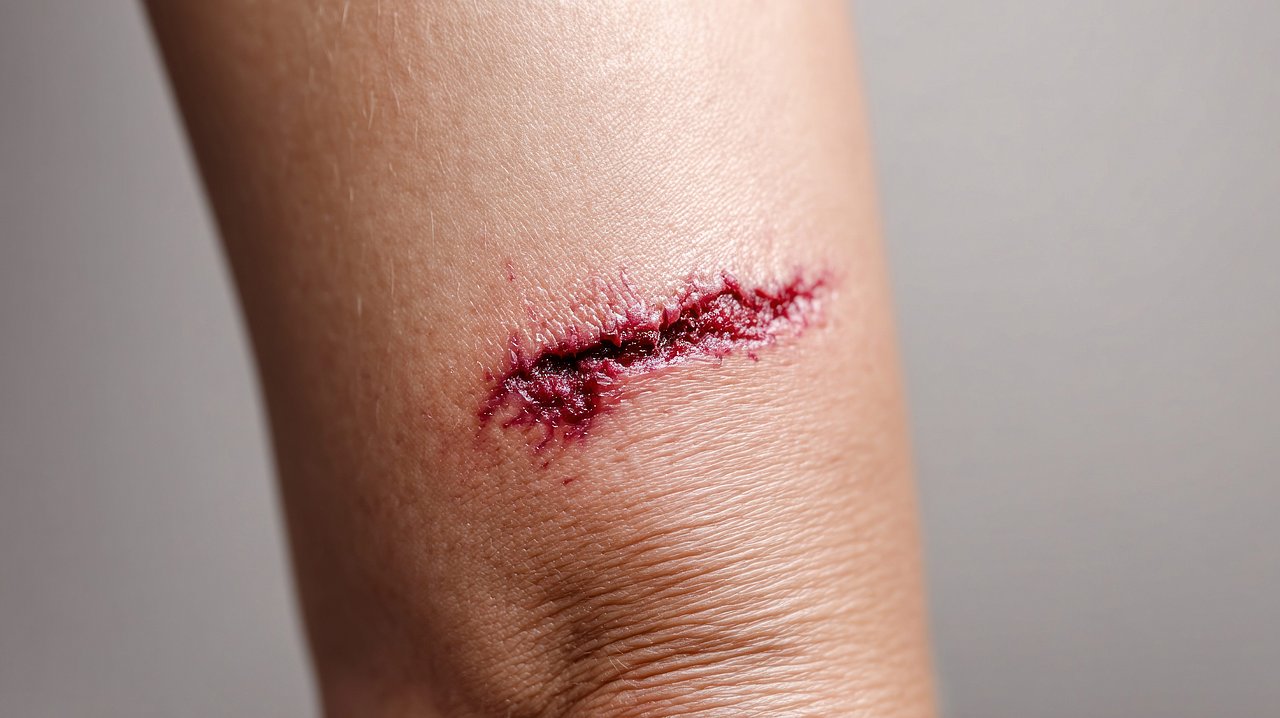
What are lacerations?
Lacerations are caused by strong mechanical forces that tear the skin. This often results in irregular wound edges and damage to deeper tissue. Lacerations usually bleed heavily, as small blood vessels are often affected. They frequently occur on parts of the body with little protective tissue, such as the head, elbows or knees.
First aid for lacerations
- Stop the bleeding:
- Press a clean cloth, sterile compress or bandage onto the wound to stop the bleeding. If possible, raise the injured area to reduce blood flow.
- Clean and disinfect the wound:
Carefully clean the wound with a wound spray to remove dirt and foreign bodies. - Protect the wound:
Cover the wound with a sterile compress or plaster. A wound dressing may be useful for larger lacerations. - Consider seeing a doctor:
Medical attention is often necessary for lacerations to ensure that the wound is properly cleaned and stitched if necessary.
When to see a doctor?
See a doctor if:
- the wound...
- is bleeding heavily and the bleeding does not stop after prolonged pressure
- is deep or has gaping edges
- was caused by a dirty or rusty object (risk of tetanus)
- dirt or foreign objects have penetrated deep into the wound
- the injury is on the face, joints or particularly sensitive areas
- signs of infection appear (e.g. redness, swelling, pus formation, fever)
Follow-up treatment and healing
After initial treatment, the wound should be kept clean and checked regularly. Change dressings and plasters daily or as needed to support healing. Healing can take a few days to weeks, depending on the severity of the injury. For deeper wounds, a doctor will often use sutures or a special skin adhesive to close the tissue optimally.
Innovative wound care for your health
With the right products and careful care, wounds can heal quickly and easily. Trust in our high-quality aluderm+ plasters and dressing materials, which offer you protection and comfort. Because a well-cared-for wound is the first step to a quick recovery!